What to Study at University of Gdansk: Top Majors
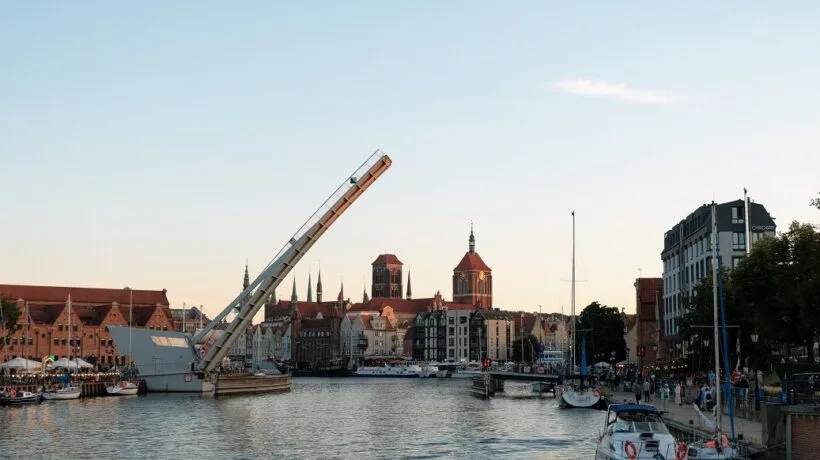
The most profitable courses to study at the University of Gdańsk (UG) in 2026 are Biotechnology (conducted jointly with the Medical University of Gdańsk at MWB), Scandinavian Studies, Finance and Accounting at the Faculty of Economics in Sopot, Practical Computer Science and Maritime Logistics. The choice of these disciplines guarantees a trouble-free entry into the Tri-City labor market – from international corporations in the Olivia Centre and Alchemia centers, through the port and maritime sector in Gdańsk and Gdynia, to Scandinavian shared service centers.
Why the University of Gdańsk and the Tri-City? Specificity of the labour market
The University of Gdańsk is the largest higher education institution in Pomerania, educating over 20 thousand students. However, its strength is not only determined by the number of faculties, but above all by its unrivaled geographical and business location.
The Main Baltic Campus in Gdańsk-Oliwa is physically connected to the largest office area in Northern Poland – Olivia Centre and the Alchemia complex at Grunwaldzka Avenue. In practice, this means that UG students go on to job interviews or internships… crossing the footbridge over the SKM tracks or crossing the street. Global technological, financial and logistics giants such as Intel, Amazon, Bayer, State Street, Dynatrace, Kainos, DNV, Equinor, Kemira and LPP operate in the Tri-City.
In addition, the University of Gdańsk forms a union of Fahrenheit Universities (FarU) together with the Gdańsk University of Technology (Gdańsk) and the Medical University of Gdańsk (MUG). In the academic year 2026/2027, this translates into joint interdisciplinary courses, the sharing of modern laboratories, a common academic base and the possibility of using the infrastructure of all three universities.
UG Golden Five – fields with the highest professional potential
When choosing to study at the University of Gdańsk, it is worth being guided not only by passion, but also by a hard analysis of the local demand for human resources. Later courses are at the forefront of graduates in terms of the speed of finding a job and the amount of first earnings.
1. Biotechnology (Intercollegiate Faculty of Biotechnology of the University of Gdańsk and MUG)
It is an absolute pearl in the crown of Gdańsk science. MWB UG-MUGed has the highest scientific category and is recognized as one of the best biotechnology centers in Central and Eastern Europe.
Why is it worth it: Education takes place in an ultra-modern building on the Oliwa Campus at Abrahama Street. From the first semesters, students work on advanced research equipment and take part in international grants.
Career after graduation: Pharmaceutical sector, diagnostic laboratories, bio-tech companies, research and development (R&D) facilities in Poland and around the world.
2. Scandinavian Studies and Business Philology (Faculty of Philology)
The Tri-City is called the “Polish capital of Scandinavian business”. Due to geographical proximity and ferry and air connections, hundreds of companies with Danish, Swedish and Norwegian passports are moving their operations and engineering centers to Gdansk and Gdynia.
Specializations: Swedish, Norwegian, Danish philology, as well as unique combinations such as Norwegian with German.
Career after graduation: Shared Service Centers (Nordea, DNV, Equinor, SEB, SEUP), specialist translation, international logistics, HR and recruiting. The starting earnings of people with fluent Norwegian or Danish in 2026 exceed the national average already in junior positions.
3. Finance and Accounting / International Economic Relations (Faculty of Economics in Sopot)
The Faculty of Economics is located in Sopot at Armii Krajowej Street, right next to the charming Park and a 10-minute walk from the famous Monciak.
Advantages of the course: The programmes of the courses are adapted to the requirements of international accreditation (e.g. ACCA, CIMA). Instead of pure theory, students solve real-world case studies provided by business partners such as State Street, Bayer or Thomson Reuters.
Career after graduation: Financial analyst, auditor in Big Four companies, stock market specialist, corporate accountant.
4. Computer Science – practical profile (Faculty of Mathematics, Physics and Computer Science)
Despite the competition from the Gdańsk University of Technology, practical computer science at the University of Gdańsk enjoys great recognition from employers.
Why Practical Profile: The program emphasizes software engineering, cloud application development, cybersecurity, and data science (Data Science). More than half of the classes are laboratories and team projects carried out under the supervision of engineers from the industry.
Neighborhood of giants: The headquarters of Dynatrace and Kainos are located a few hundred meters from the faculty building at Wita Stwosza Street.
5. Oceanography, Aquaculture and Maritime Economy (Faculty of Oceanography and Geography)
These are unique destinations on a national scale, inscribed in the identity of the Pomeranian region.
Unique infrastructure: The Faculty has its own, most modern research vessel in Poland – r/v OCEANOGRAF, on which students take training cruises and research in the Baltic Sea. Classes take place both in Gdańsk and at the specialized Institute of Oceanography at Kosciuszko Square in Gdynia.
Outlook: The dynamic development of offshore wind farms in the Baltic Sea in the years 2026-2030 creates a huge demand for oceanographers, marine biologists and environmental assessment specialists.
Classics that always defend themselves: Law and Psychology at the University of Gdańsk
In addition to strictly market-based faculties, the University of Gdańsk has maintained its leading position in long-cycle master’s education for years.
Law at the Faculty of Law and Administration (WPiA)
The Faculty of Law is located in a characteristic, glazed building called “Aquarium” by students at Bażyński Street.
Why the Faculty of Law and Administration of the University of Gdańsk: Gdańsk law regularly ranks at the top of the rankings of graduates for attorney-at-law, attorney-at-law, notary and judge apprenticeships.
Maritime specializations: As the only university in Poland, the University of Gdańsk offers such extensive modules in the field of Maritime Law, International Trade Law and Marine Environmental Protection Law.
Psychology at the Faculty of Social Sciences (WNS)
One of the most popular destinations in the whole of Northern Poland, where a dozen or so candidates fight for one place every year.
Infrastructure: The modern building of the WNS has laboratories for testing the nervous system, psychological testing laboratories and Venetian mirrors for observing group behavior.
Development paths: Clinical psychology, psychology of business and organization (highly valued in Tri-City HR departments) and forensic psychology.
Campuses of the University of Gdańsk – what does the map of the university look like?
Studying at UG does not mean staying in one place. The university is divided into three main geographical areas:
1. Baltic Campus in Gdańsk-Oliwa (the heart of the University of Gdańsk)
The largest and most modern academic complex in Northern Poland, located in the square of Wita Stwosza, Bażyńskiego, Abrahama and Grunwaldzka Streets.
What you will find here: Faculty of Law, Faculty of Social Sciences, Faculty of Philology, Faculty of Biology, Faculty of Chemistry, Faculty of Mathematics, Physics and Computer Science, Main Library of the University of Gdańsk, Rector’s Office and the Alternator Academic Cultural Centre.
Communication: Immediate vicinity of the SKM Gdańsk Przymorze-Uniwersytet high-speed railway stop and tram stops at Grunwaldzka Avenue (lines 2, 5, 6, 11, 12).
2. Sopot Campus
Picturesquely located complex at Armii Krajowej Street and Piaskowa Street.
What you’ll find here: Faculty of Economics and Faculty of Management.
Climate: Intimate atmosphere, proximity to the SKM Sopot station and the very center of the resort.
3. Gdynia Campus
Located in a representative point of Gdynia, right next to Kościuszko Square and the President’s Pool.
What you will find here: Institute of Oceanography of the Faculty of Oceanography and Geography.
Advantage: Exit from classes directly to the city beach in Gdynia and a view of the sailing ships Dar Młodzieży and ORP Błyskawica.
Student life and logistics – how to live and move around Gdańsk?
Studying in the Tri-City is associated with mastering the specifics of local communication. The Tri-City is structured linearly – along railway tracks.
Transport: SKM, ZTM and FALA System
Fast Urban Rail (SKM): It is the communication backbone of the agglomeration. SKM trains run every 6-8 minutes during rush hours. The key stop for most students is Gdańsk Przymorze-Uniwersytet.
Pomeranian Metropolitan Railway (PKM): It connects the Oliwa Campus (Gdańsk Strzyża stop) with the upper terraces of Gdańsk (Wrzeszcz, Jasień, Matarnia) and Kashubia.
Semester Ticket and FALA System: In 2026, students will use the integrated FALA system, allowing them to comfortably travel on ZTM Gdańsk trams, ZKM Gdynia trolleybuses and SKM trains on a single electronic ticket.
Where do UG students live?
Oliwa and the Littoral: The most desirable districts due to the possibility of walking to the Main Campus.
Wrzeszcz: The center of student social life. The district is well connected with Oliwa (5 minutes by SKM), full of pubs, cafes and restaurants (the area of Wajdeloty and Garnizon streets).
Zaspa and Zaspa-Młyniec: Housing estates of blocks of flats ideally located between the Oliwa Campus and the beach in Brzeźno and Jelitków.
Where to play and relax during breaks from studying?
100cznia and B90 (Areas of the Former Gdańsk Shipyard): The absolute number one of student alternative life. Catering containers, live music, sun loungers and a unique industrial vibe.
Granary Island and Downtown: A party and club venue in the heart of historic Gdansk.
Beach in Jelitków and Brzeźno: From the Oliwa Campus, you can get to the beach by Mevo city bike or tram in less than 15 minutes. This is the most popular place for integration after May lectures.
Step by Step: How to Get Into the University of Gdańsk in 2026?
Recruitment at the University of Gdańsk is carried out fully electronically via the IRK (Internet Recruitment of Candidates) system.
Checklist of a candidate for studies:
- Step 1: Creating an account in the IRK UG system (recruitment usually starts in the first half of June).
- Step 2: Choosing the majors and paying the admission fee (you can choose several majors by setting their priority).
- Step 3: Entering the results of the matura exams (after the results are announced by the CKE at the beginning of July).
- Step 4: Tracking ranking lists (the first threshold lists are published in mid-July).
- Step 5: Submitting documents: After qualifying, you usually have 3-4 working days to submit a set of documents (original/copy of the high school diploma, photos, application) to the Faculty Admissions Committee.
Unique and niche courses at UG – hidden gems of recruitment 2026/2027
In addition to flagship faculties such as Law, Psychology and Scandinavian Studies, the University of Gdańsk offers niche programs that respond to very narrow but extremely profitable gaps in the labor market.
1. Genetics and Experimental Biology (Faculty of Biology)
The course was created for people who want to avoid general zoological or botanical knowledge, and want to work in modern molecular laboratories.
What distinguishes this course: Classes take place in the new building of the Faculty of Biology at Wita Stwosza Street, equipped with electron microscopy laboratories, tissue culture laboratories and phytotronic chambers.
Labour market: Polpharma Biologics in the Gdańsk Science and Technology Park (Trzy Lipy Street), diagnostic companies, clinical research sector (CRA – Clinical Research Associate).
2. Bioinformatics (Interdisciplinary Field of Study at the University of Gdańsk and MUG)
A combination of life sciences with advanced data analysis, Python and R programming, and machine learning.
Why it’s a bull’s-eye: The pharmaceutical and medical industries generate petabytes of genetic data. Bioinformatics is a profession that combines the flexibility of a programmer’s work (the option of remote work for foreign corporations) with the prestige of the HealthTech sector.
3. Chemical Business (Faculty of Chemistry)
Run together with the Faculty of Economics, the field of study is unique on a national scale.
Educational profile: Students combine hard knowledge in the field of analytical, cosmetic and environmental chemistry with management, patent law and the introduction of chemical products to the European Union market.
Headquarters: A modern complex of the Faculty of Chemistry on the Oliwa Campus, with its own semi-technical hall.
4. Resocialization with Criminology (Faculty of Social Sciences)
A discipline that combines clinical psychology, sociology of deviation and criminal law.
Prospects: Employment in uniformed services, prisons, the judiciary (probation officers), but also in the private sector – in the internal security departments of companies and economic intelligence agencies.
5. English-Speaking Majors for International Careers
For those planning to work in international structures without geographical restrictions, UG offers full cycles of education in English:
Global Business Administration (Faculty of Management in Sopot): Prepares for work in international project teams.
Cultural Communication (Faculty of Philology): Combines knowledge of intercultural communication, public relations and new media.
Benefits for a UG student resulting from the FarU network:
Common library system: Even though you are a student of the University of Gdańsk, your card entitles you to borrow collections from the Main Library of the Gdańsk University of Technology (the famous main building at Narutowicza Street in Wrzeszcz) and the Main Library of MUG at Dębowa Street.
Inter-university scientific clubs: Possibility to join engineering projects and solar boats built at Gdańsk Tech or medical projects carried out at the UCK Academic Hospital.
FarU Mobility System: Selected elective and university-wide courses from the offer of the Gdańsk University of Technology or MUG are available to UG students with full ECTS credits.
Labour market in the Tri-City 2026–2030 – industry report for graduates
The choice of a field of study at the University of Gdańsk should be compared with the long-term development strategies of the Pomeranian Voivodeship. The Tri-City labor market is characterized by a very low unemployment rate and a clear dominance of three sectors of the economy.
Sector 1: Offshore Wind
The construction of wind farms in the Baltic Sea is the largest investment project in the history of Pomerania.
Graduates of the University of Gdańsk are in demand: Oceanographers, marine biologists (environmental impact assessments), specialists in spatial management, lawyers specializing in maritime and construction law, and logisticians (Port of Installation in Gdańsk).
Sector 2: Modern Business Services (BPO/SSC/IT)
The Olivia Centre and Alchemia office centres in Gdańsk-Oliwa form one of the largest business ecosystems in Central Europe.
Wanted graduates of the University of Gdańsk: Graduates of Foreign Philology (especially Scandinavian, German, French, Dutch), Finance and Accounting (with knowledge of the ACCA classification), Computer Science, Analytics & Data Science.
Sector 3: Biotechnology, Pharmaceuticals and MedTech
The Tri-City is becoming the northern biotechnology hub of Polish.
Wanted graduates of the University of Gdańsk: Graduates of the Faculty of Mathematics and Physics of the University of Gdańsk, Faculty of Chemistry and Faculty of Biology. Key employers include pharmaceutical companies, research laboratory chains and companies producing medical reagents.
The most important facilities on the Oliwa Campus:
Main Library of the University of Gdańsk (BUG): Located in the very center of the complex at 53 Wita Stwosza Street. It offers free access zones for books, individual rooms for quiet study and computer workstations. This is the main place of concentration for students during the exam session.
Faculty of Law and Administration (WPiA): Usually called the “Aquarium” because of its huge, glass facades. It houses state-of-the-art courtrooms simulating real court trials.
AULA 041 at WNS: A place for the most important open lectures, political debates and meetings with representatives of the world of culture and business.
Canteen and catering zones: In addition to points in individual faculties (e.g. Bistro at WNS or Café at the Faculty of Law and Administration), students use the catering facilities in the nearby Garnizon housing estate or in the Alfa Centrum shopping center at Kołobrzeska Street.
Academic circles and student organizations building CVs
When choosing UG, it is worth joining organizations from the first year that make it easier to get the first entries in your CV and establish business contacts.
- International Finance Research Club (Faculty of Economics): Organizes workshops with stock market analysts, trips to the Warsaw Stock Exchange and investment competitions.
- Scientific Circle of Chemists: It allows you to independently conduct chemical syntheses, participate in popular science shows and go to chemical fairs.
- AIESEC Gdańsk: The largest international student organization, enabling volunteering and internship trips abroad and organizing recruitment events at the university.
- ALTERNATOR Academic Cultural Centre: A space for people interested in theatre, dance, music or film (the famous DKF “Blonde’s Love”).
- AZS UG (Academic Sports Association): Sports sections from sailing and swimming, through basketball, to e-sports.
Frequently Asked Questions (FAQ)
1. Is it easy to transfer between majors or universities within FarU?
Thanks to the Fahrenheit Association of Universities (UG, PG , MUG), the procedures for recognizing ECTS credits and moving on to selected inter-university modules have been significantly simplified. Transfer to another field of study within the University of Gdańsk depends on the curriculum differences and the consent of the Dean of a given faculty.
2. How much does a place in a University of Gdańsk dormitory cost in 2026/2027?
Prices for a place in a double room in the student dormitories of the University of Gdańsk in Oliwa or Sopot range from PLN 600 to PLN 850 per month (including utilities and high-speed academic internet). Single rooms are more expensive and cost from 900 to 1,200 PLN.
3. Is it easy to reconcile full-time studies with work in a corporation at the University of Gdańsk?
In higher years (especially in second-cycle studies and in higher semesters of Finance, Computer Science or Philology), faculties arrange plans in a compressed way (e.g. classes 3 days a week). In addition, students with high academic performance can apply for IOS (Individual Organization of Studies), which allows you to flexibly combine part-time work at the Olivia Centre with attendance at lectures.
4. Which is better: Computer Science at the University of Gdańsk or at the Gdańsk University of Technology?
Computer science at the Gdańsk University of Technology (ETI) is more engineering, hardware and low-level (engineering degree). Computer science at UG (practical profile) focuses more strongly on high-level programming, application software development, web projects and data analytics. The choice depends on whether you prefer physics and electronics or clean code and app development.
5. How to get from the main Campus in Oliwa to Sopot or the Old Town?
The fastest means of transport is the SKM railway. Gdańsk Przymorze-Uniwersytet is a 7-minute drive from Sopot Station and a 14-minute drive from Gdańsk Główny (Old Town) Station.
6. Are foreign exchanges organized at the Faculty of Philology of the University of Gdańsk?
Yes, UG has an extensive network of partnerships under the Erasmus+ programme. Students of philology, Scandinavian studies or social sciences can spend a semester or a year at universities in Sweden, Norway, Germany, Spain or the United Kingdom, receiving a scholarship in euros.
7. Do you need to be able to swim and dive when studying Oceanography?
Skill to swim is required for safety reasons during maritime internships on a research vessel. Diving courses and certifications (e.g. KDP/CMAS or PADI) are not mandatory at the start, but the university allows them to be carried out as part of academic sections and scientific circles.
8. Is it difficult to get into Psychology or Law at the University of Gdańsk?
These are the two most popular traditional destinations. In the recruitment for Psychology, the point thresholds require very high results from the extended matura exam in Polish, mathematics, biology or a foreign language. At Law, the thresholds are a bit more flexible due to the larger number of places per year (over 300 people in stationary mode).
Studying at the University of Gdańsk is more than just getting a diploma from a recognized university. It is an entry into a unique metropolitan ecosystem, combining a dynamically developing labor market, proximity to nature (the Tri-City Landscape Park directly adjacent to the Oliwa Campus and Baltic beaches) with an international student community.
If you are looking for studies that will give you hard professional competencies and allow you to smoothly take over a full-time job in an international company even before defending your master’s thesis – fields such as Biotechnology, Scandinavian Studies, Finance in Sopot or Practical Computer Science at the University of Gdańsk are one of the best educational choices in Poland.